The Big Wave

Anton Tonev

Anton Tonev

Strategist

Anton Tonev

Anton Tonev

Strategist
Anton joined Trium Capital in February 2023 to be the third member of the Trium Larissa Global Macro Strategy’s Portfolio Management & Research team. Anton’s previous experience includes being Head of Thematic Research for HSBC where his roles included being Head of Global Macro for HSBC Multi-Asset Trading Desk in London. Prior to that Anton was a Portfolio Manager and Thematic Researcher for Moore Capital, which followed 7 years at Morgan Stanley, where he worked as a Trader alongside Peter Kisler for a period . Anton brings additional research and idea generation capabilities to the Larissa team panning Developed and Emerging Markets. Anton has a BSc in Economics and Finance from Wharton Business School.
Trium Larissa Global Macro

Latest Insights

Share on

“You never really know what’s coming – a small wave, or maybe a big one. All you can really do is hope that when it comes, you can surf over it, instead of drowning in its monstrosity.” – Alysha Speer

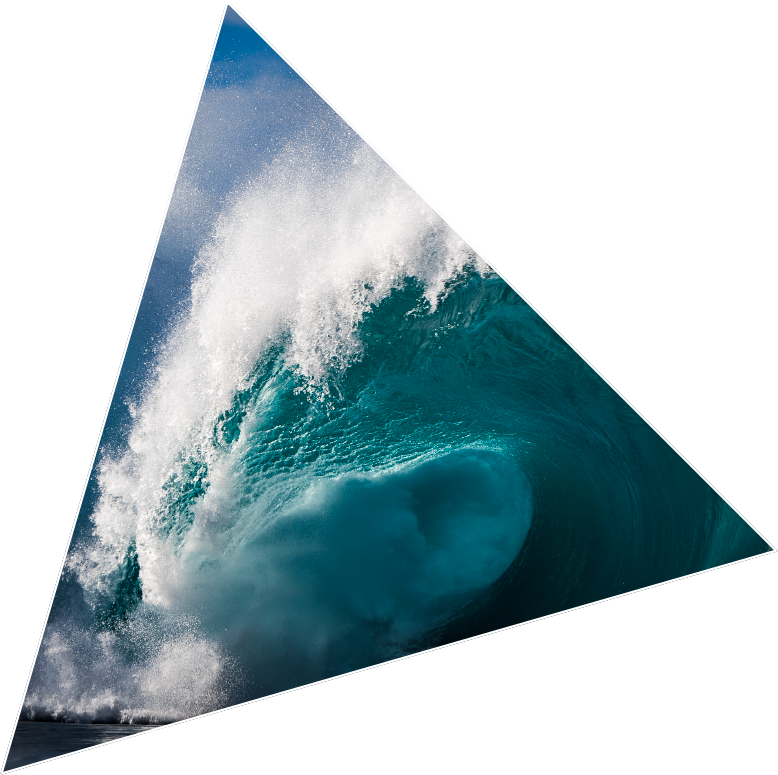
I can see surfers from my house in the winter, lining up in wait for the big wave. Sometimes it is a long wait, and many give up and go home. The ones that stay in the water eventually get rewarded, but for many, it is a pyrrhic victory as the wave overpowers them and they end up straight back in the sea, many of them bruised, if not literally, at least figuratively. There are some who manage to ride the big wave, sliding graciously towards the beach, beaming with pride, and basking in the limelight of the few spectators awaiting them on shore.

Many investors in financial markets have been waiting for the ‘big one’ ever since the 2008 GFC. Few have lasted with their portfolio intact since then, courtesy of ‘markets can stay ‘irrational’ longer than you can stay solvent’. Rightly so, a lot of things have changed since 2008 on the regulatory side (QE for one), on the technology side (access to markets), and on the investors’ side (direct retail participation). Maybe the market has not been irrational after all: it has been impossible to get a financial crisis purely from stretched valuations – there are always more buyers than sellers, and there is always a rationale for why ‘things are different this time’.

Unless the markets hit the limits of the real-world resource availability. Since the 1970s, recessions have always come after a financial crisis, which hits the consumer and causes demand to slump. And central banks (the Fed at least) have always responded by cutting rates. Covid was probably the first recession in the modern era, which was caused by a combination of supply-side and demand-side factors. It did not last because governments around the world implemented massive fiscal stimulus to offset it. What we are seeing today is the first proper supply-side crisis since the 1970s. And it is big. In fact, the oil shock is bigger than all the 1970s oil shocks taken together1. And this time around, government fiscal coffers are empty, and central banks’ hands are tied – not easy to cut rates facing an inflationary tsunami.

So, this could be the big one. The level of investors’ complacency is certainly high. Judging by sell-side commentary, while hedge funds’ gross exposure is down, it is still quite elevated by historical standards. Real institutional money has not started reducing exposure in earnest, and retail is still buying, though much less than a month ago. This is certainly reflected in some financial market prices: US equities are down just 8% from their all-time highs, and credit indices have widened only half as much as post-Liberation Day last year.

Why the complacency?

It could be simply recency bias – it has not paid off to sell long risk exposure at all in the last 18 years or so – the market always comes back up fairly quickly. It could be that investors do not expect the negative supply shock to last simply because only a few traded the 1970s, or they really do not view the current supply crisis as “that bad”. If you are an investor still in the water waiting for that big wave, you are betting on market sentiment to change for the worse (former above) once real commodity shortages hit your local grocery store (latter): essentially, molecules taking over bits and bytes.

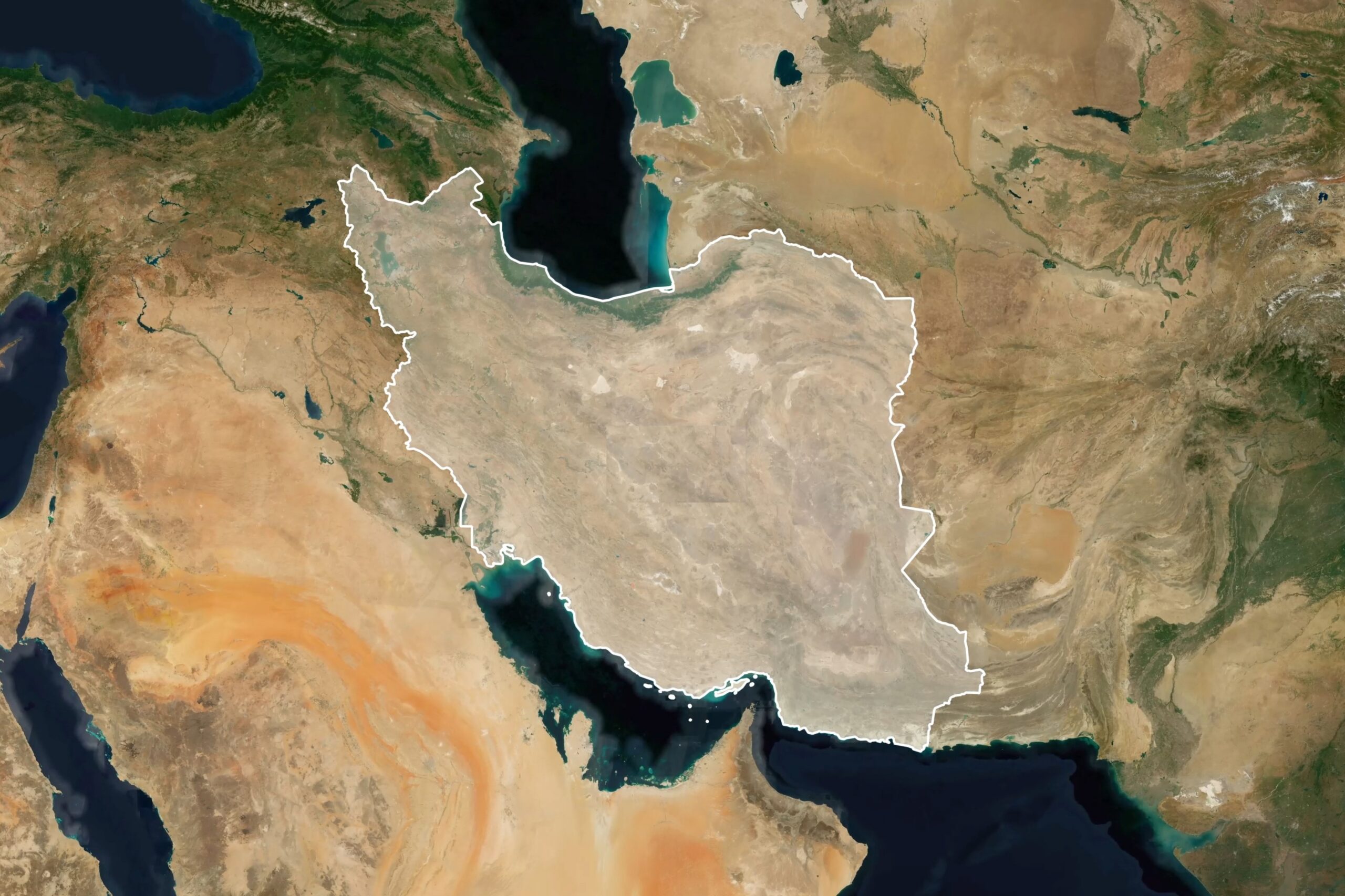
But a month into the Iran war, there are no signs of any de-escalation, let alone a way out of the conflict, which could bring us back to the same flow of crude globally. By now, the cumulative loss of crude supply is getting very close to 400 mb/d, which the G7 economies decided to release from emergency storage. Every day that passes adds to the shortage. And that is not counting the crude oil (and gas) ‘permanently’ lost due to strikes on energy infrastructure, or ‘temporarily’ lost due to forced production stoppages. The market is facing a nasty time decay as long as the conflict lasts and probably even long after.

The US administration’s attempts to TACO have proven useless and rightly so – it looks like ‘everyone’ has underestimated the will of either Iran or Israel to continue with the conflict until a ‘permanent’ solution is reached. Strictly speaking, a ceasefire seems to suit only the US, which needs to face the reality of the Midterm elections now. But even for the US, it is not easy to walk away, given that the Strait of Hormuz remains closed for all intents and purposes. Eliminating several layers of Iran’s elite has introduced a level of unpredictability and made negotiations pointless when trust is absent.

This is a structural shift

Liberation Day introduced a trend of USD and USD assets underperformance last year, but not necessarily outright selling. The Iran war may finally usher some proper selling of USD assets as foreign governments need funds to shore up their budgets, and retail needs money for basic necessities. Essentially, we are just in year 2 of a large structural shift: an unwind of the post-2008 GFC capital flow structure.

In other words, while Trump’s tariffs reduced trust in the US as a reliable partner, the Iran war inflicted actual damage on the rest of the world on the back of US actions abroad. Global supply chains were already under a lot of stress before the war, now they are completely broken. Energy is the foundation of the commodity pyramid: if it does not flow freely, nothing else gets sourced or produced. Iran is now planning to have a lot more control over the Strait of Hormuz under any reasonable post-war scenario. Bab-al-Mandeb is also not 100% secure. The US may no longer be regarded as a guarantor of maritime safety – a role it has had for at least part of the last decade.

Along the same path of thoughts, the Iran war may be finally bringing to the surface a fact which the world has already been living with for decades: the largest fossil fuel deposits globally are indeed located in unstable parts of the world. The natural conclusion of this thought is that countries around the world will first prioritise having more than adequate fossil fuel deposits, and second, the race is on for fossil fuel alternatives. With the US having put all its eggs in the fossil fuels basket (both directly and through proxies), while China is the leader in solar and nuclear energy, this shift will naturally further push investments away from the USD.

While the last 50 years may have been roughly characterised by the rise of ‘digital’ industries (the Internet) powered by hard fossil fuels, the next decades may be dominated by hardware ‘manufacturing’ (to rebuild decaying infrastructure in the West) powered by ‘soft’ molecules (solar and nuclear). And while the US was the dominant power in the former, China emerges as the next superpower in the latter.

There are essentially two big waves coming for investors to catch. But it is best to focus on one at a time. If you are still in the water and your surfboard is still intact, maybe your time is about to come.

1World in energy crisis worse than 1970s’ oil shocks combined, IEA head says | US-Israel war on Iran News | Al Jazeera

The views expressed should not be viewed as investment recommendations and are subject to change. This material is for informational purposes only and does not constitute investment advice, an offer, or a recommendation.

RELATED INSIGHTS

SIGN UP TO TRIUM TALKS
Trium Talks triangle