A Turning Tide for the South Korean Won

Anton Tonev

Anton Tonev

Strategist

Anton Tonev

Anton Tonev

Strategist
Anton joined Trium Capital in February 2023 to be the third member of the Trium Larissa Global Macro Strategy’s Portfolio Management & Research team. Anton’s previous experience includes being Head of Thematic Research for HSBC where his roles included being Head of Global Macro for HSBC Multi-Asset Trading Desk in London. Prior to that Anton was a Portfolio Manager and Thematic Researcher for Moore Capital, which followed 7 years at Morgan Stanley, where he worked as a Trader alongside Peter Kisler for a period . Anton brings additional research and idea generation capabilities to the Larissa team panning Developed and Emerging Markets. Anton has a BSc in Economics and Finance from Wharton Business School.
Trium Larissa Global Macro

Latest Insights

Share on

The South Korean Won (KRW) could be on the verge of a major shift, with the flow backdrop turning aggressively pro-KRW over the next six months. Despite running a large current account surplus, KRW has been held back by exporter USD hoarding and heavy local portfolio outflows – dynamics that now look poised to reverse. A series of policy actions, structural flow catalysts, and investor‑behaviour changes are aligning to create a potentially powerful tailwind for KRW appreciation.

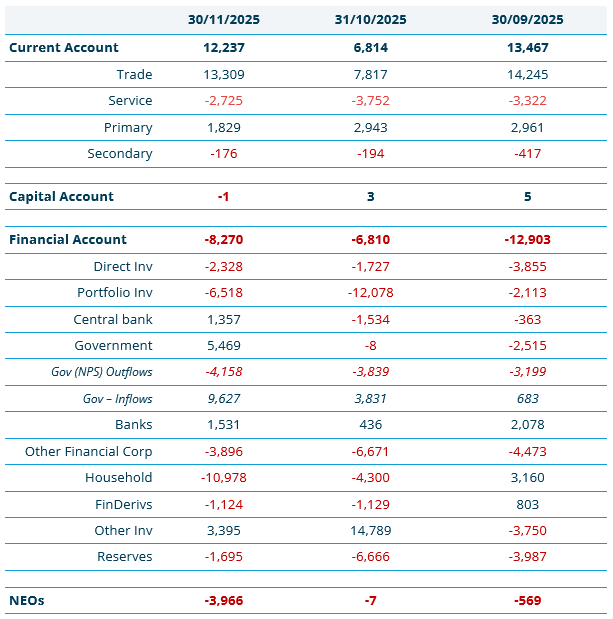
Exhibit 1: Korea’s Balance of Payments (USDmn)

Source: Bloomberg & Trium Capital LLP.

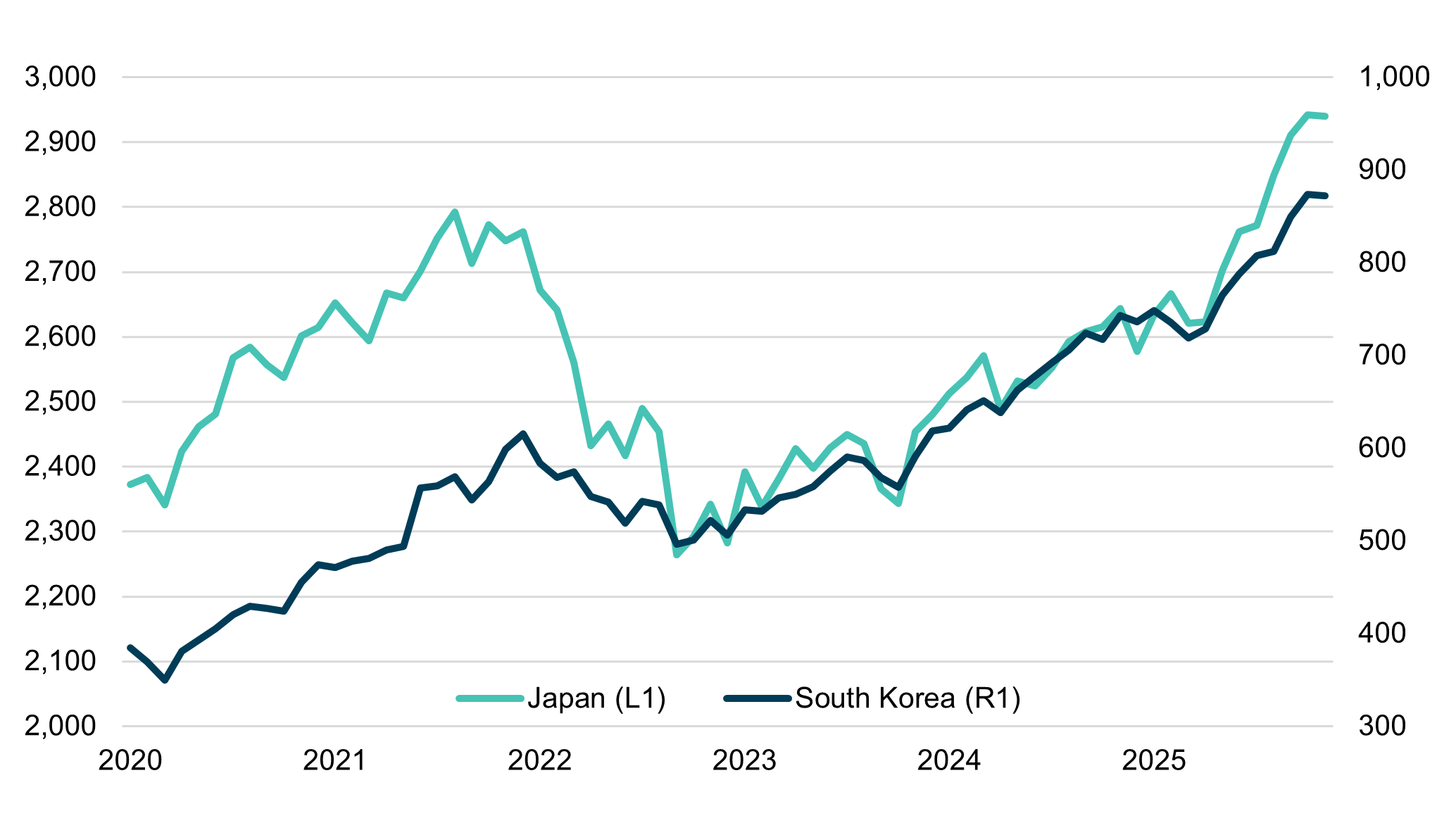
Like many other surplus countries, South Korea runs a large Current Account surplus (mostly due to goods traded), partially offset by a large Financial Account deficit, mostly caused by local portfolio investing abroad (by Households, Pensions, etc.). Now, purely based on flows, that should normally be net positive for KRW (and other surplus countries’ currencies). The reason this has not been the case recently is: (i) South Korean exporters have been hoarding USD – their hedging ratios have collapsed to below 30%, and (ii) the local’s portfolio outflows have picked up substantially after COVID. In fact, the two are related, with the latter, indirectly, driving the former: the stronger the USD, the less inclined exporters are to part with it.

Exhibit 2: Total Holdings of USD Assets (bn)

Source: Bloomberg & Trium Capital LLP.

This flow picture can potentially change dramatically in 2026

1. Korean authorities have urged, and even pressured, exporters to convert more of their USD earnings into KRW. In December, they announced that they are starting to monitor their hedge ratios and specifically put pressure on Samsung and SK Hynix to sell USD. Policy makers relaxed USD liquidity requirements for exporters to boost domestic USD liquidity. In January, the Customs Service launched an inspection of exporters’ books looking for anomalies between trade values reported and actual settlements. Just bringing exporters’ hedge ratio to 50-60% would be sufficient to cover the retail outflows each month.

2. Furthermore, in mid-December 2026, the Korea National Pension Service (NPS) began its flexible portfolio FX hedging program in coordination with the Bank of Korea (BOK). We have no reason to think this hedging will not continue, given that KRW has not moved significantly in the meantime and that policymakers still intend to strengthen the currency. This FX hedging program can potentially generate $5Bn of outflows per month.

The NPS leadership also changed in December 2025. By the end of January 2026, NPS had already shifted its asset allocation more toward domestic equities, helping the KOSPI Index to rise 24% for the month! Will NPS also shift its allocation more toward the domestic bond market, given that rates are now above USTs at the front end of the curve? This would mean less demand for USD, not necessarily more for KRW, but it would still be a positive development for the currency relative to the current status quo.

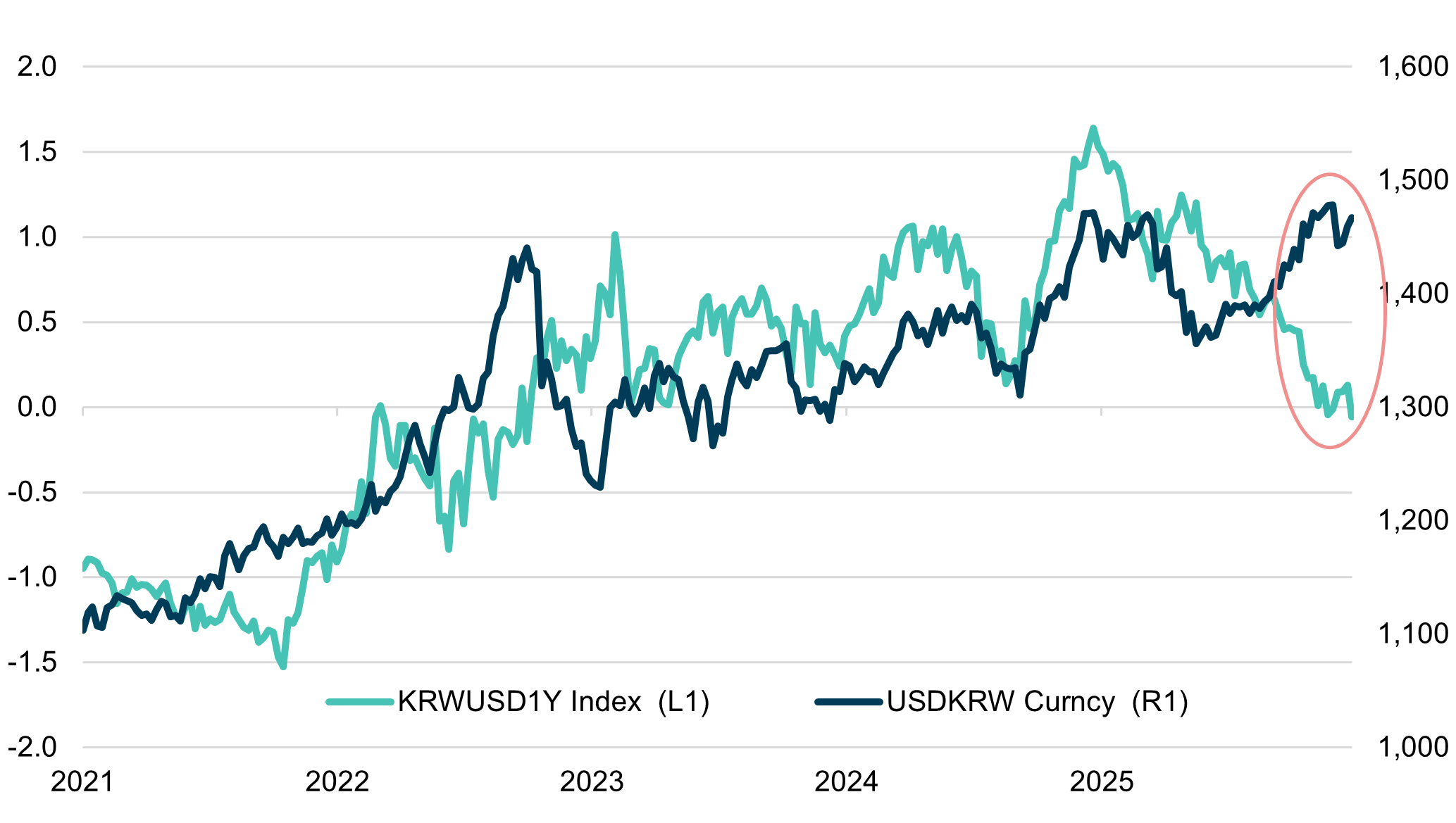
Exhibit 3: USDKRW vs. 1y1y few rates spread

Source: Bloomberg & Trium Capital LLP.

3. An inclusion in the World Government Bond Index, a major global bond benchmark, is expected to start in April this year. The decision was made in October 2024, scheduled to start in November 2025, and was postponed for smoother implementation. Using simple benchmark analysis, this could mean demand for Korean bonds equal to $50-60Bn. The caveat is that foreign investors tend to hedge some portion of their local bond investments, so we are unlikely to see the effect of the full amount on KRW.

4. Further down the line, there are expectations of a decision by MSCI to reclassify Korea as a ‘developed market’ with the Ministry of the Economy and Finance setting out a comprehensive roadmap for its inclusion by MSCI in developed market indices. The next decision is scheduled for June this year. This could potentially bring inflows of up to $40Bn over time.

5. However, the biggest impact on flows would be if Korean retail investors buy fewer foreign equities and bonds and start repatriating funds. This has been a major focus for Korean policymakers, who have admitted (most recently by the BOK at the January interest rate meeting) that this was the main reason the KRW was weakening last year. To that effect, authorities announced in December last year a temporary capital gains tax exemption for individual investors who sell foreign equities and repatriate the proceeds to South Korea (they must deposit the funds in a special ‘reshoring investment account’ for at least one year of domestic investment – if the money is invested in domestic equities, there could be further capital gains deductions). Other measures announced include tax benefits for currency hedging on existing overseas holdings. These efforts can not only completely reverse retail outflows but potentially create a huge tailwind for KRW.

6. And if all of this fails, there is also a particularly high probability that BOK intervenes in the FX market with the US Treasury’s blessing. Recent comments by US Treasury Secretary Bessent that KRW is unjustifiably weak were actually made with a purpose: to ensure Korea fulfils its promise to invest in the US as part of last year’s trade agreement. KRW needs to be stable! The US-Korea joint fact sheet does include a section on FX stability in connection with the investment commitments.

Putting all these developments together, South Korea is setting up for one of the most meaningful positive flow reversals in years. Exporter USD selling, NPS hedging, index‑driven inflows, retail repatriation incentives, and potential policy intervention all point in the same direction: a sharp improvement in the KRW flow balance. Even if only a few of these catalysts materialise, the combination is likely enough to break the entrenched bearish sentiment around KRW.

The views expressed should not be viewed as investment recommendations and are subject to change. 

RELATED INSIGHTS

SIGN UP TO TRIUM TALKS
Trium Talks triangle